Shane Claiborne and Jacob C Hammes
A Better World is Possible
Public Pavilion and Sculpture
3200 Potter St. Philadelphia, PA
Cast Concrete, decommissioned firearms, steel, brass, architectural glass, Pennsylvania Bluestone, LED lights and electronics, Mahogany, Herbs and wildflowers.
2025
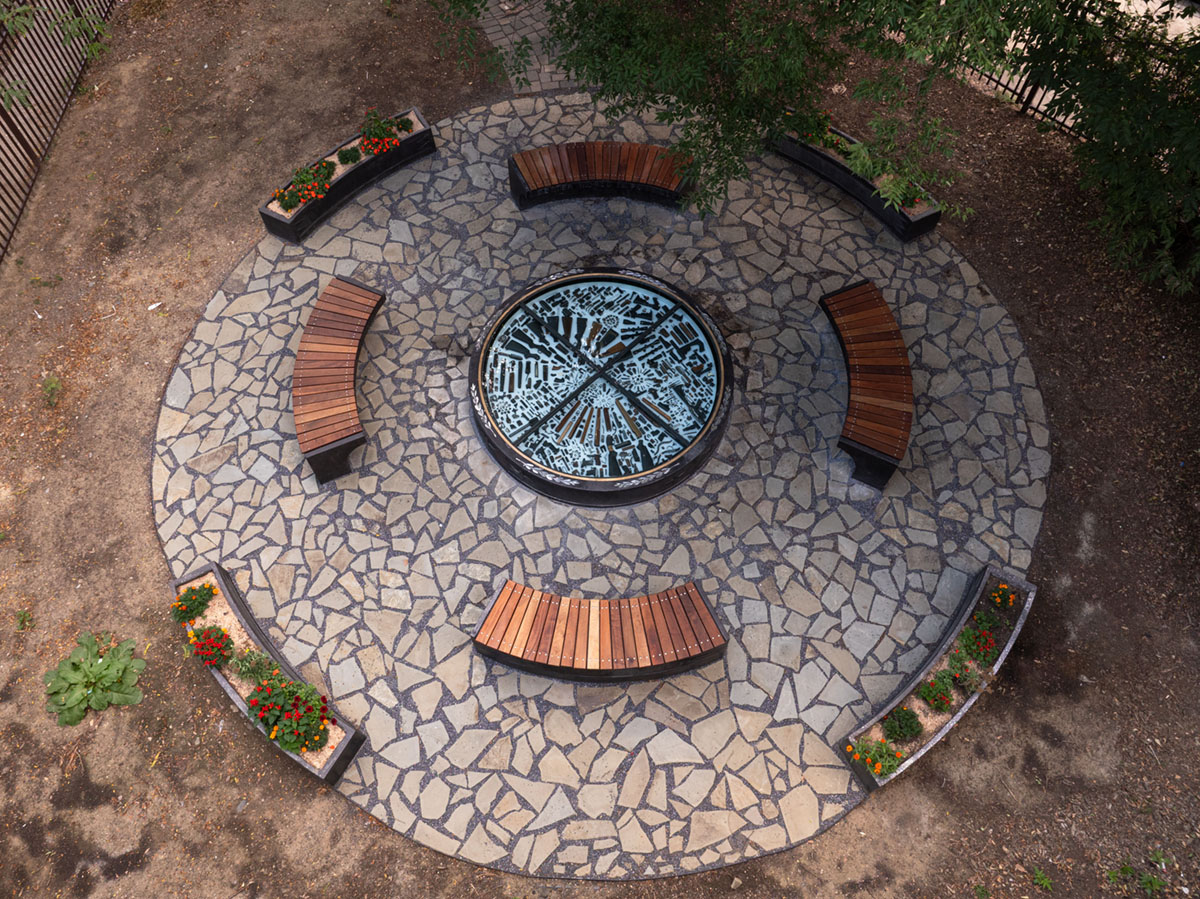
A Better World is Possible is a sculptural pavilion designed by artists Jacob C Hammes and Shane Claiborne engaging with the ongoing public health epidemic of gun violence in Philadelphia. Located in Kensington at the center of the Simple Way’s Peace Park, the 30ft diameter site is designed as a gathering space that includes cast concrete benches wildflower planters, and a center monument featuring over a thousand pieces of steel, wood and plastic harvested from decommissioned firearms, sealed in a concrete vessel under architectural glass.
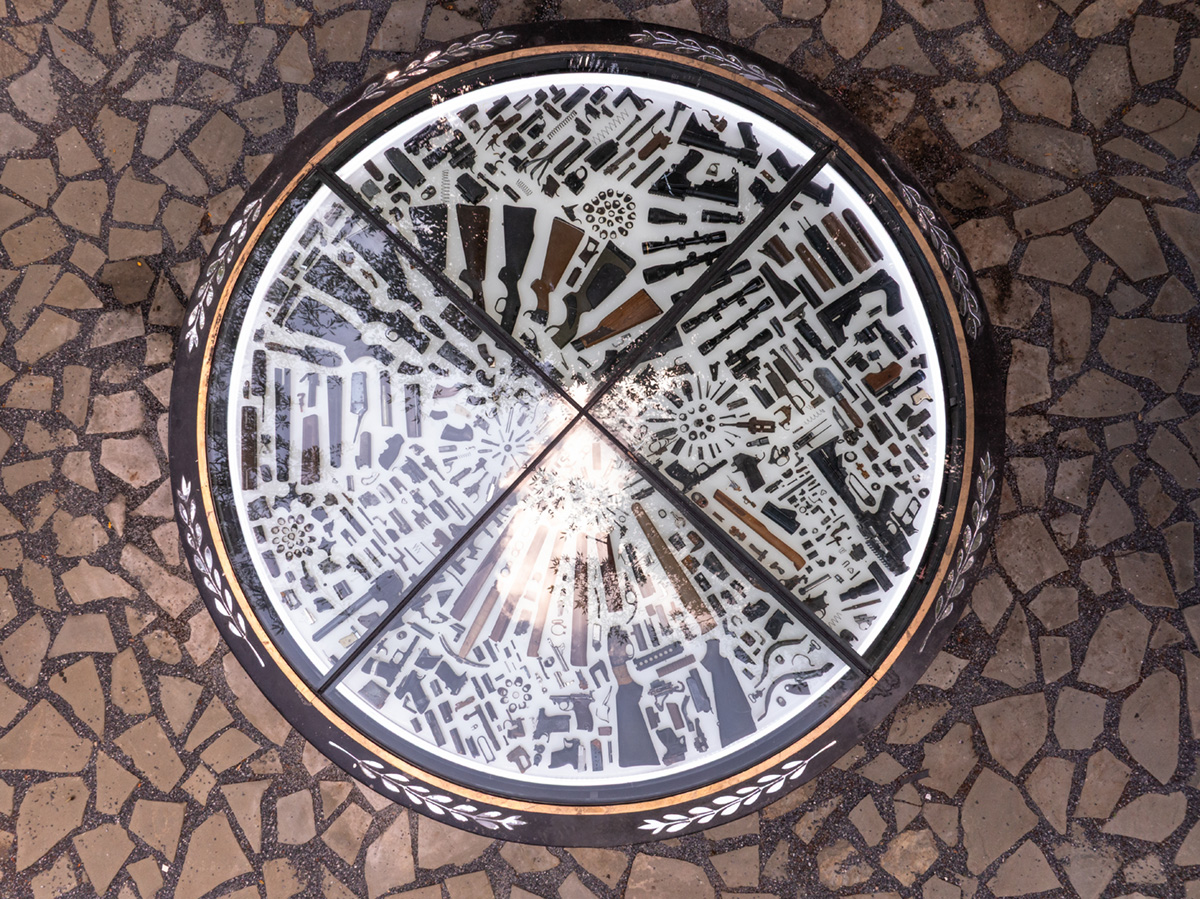
The chopped guns are arranged on the surface of a light box that illuminates for one minute every 11 minutes, symbolically functioning as a silent alarm or reminder that currently in the United States, a person dies of a gun death every 11 minutes. With benches and planters arranged in concentric circles surrounding the low circular cylinder of cast concrete, the site is designed to resemble a bonfire, and conceived as a memorial and site of contemplation for those affected by gun violence.
One of the critical conceptual considerations of the project was how to use such politically charged material as guns, while negating the possibility of the artwork having opposite interpretations as intended. In American culture, where guns are glorified and violence is celebrated, the mere image of a gun can invoke either reverence or trauma depending on one’s personal relationship to the objects. For an artwork using chopped up gun parts, the concept and design had to avoid at all costs the unintentional reinforcing of an ingrained reverence for firearms that we as a culture seem to possess. Our concept had to address the act of destroying guns that can become transformative and useful.
Initially Hammes and Claiborne’s conversations regarding the use of gun parts in a public monument was approached as a freestanding statue with the steel gun parts welded together into a static object. But after conversations with members of the community and certain conceptual ideas developed, the approach changed. In December of 2023 during an open studio event at Raw Tools, some teenagers participating in MIG welding demos asked if it would be possible to weld a mobile fire pit with gun parts, so that they could take it with them to have bonfires around the neighborhood. White this was deemed not suitable due to the unknown metallurgy of the parts, the image and function of a fire pit stuck with the artists, and became central to the design.
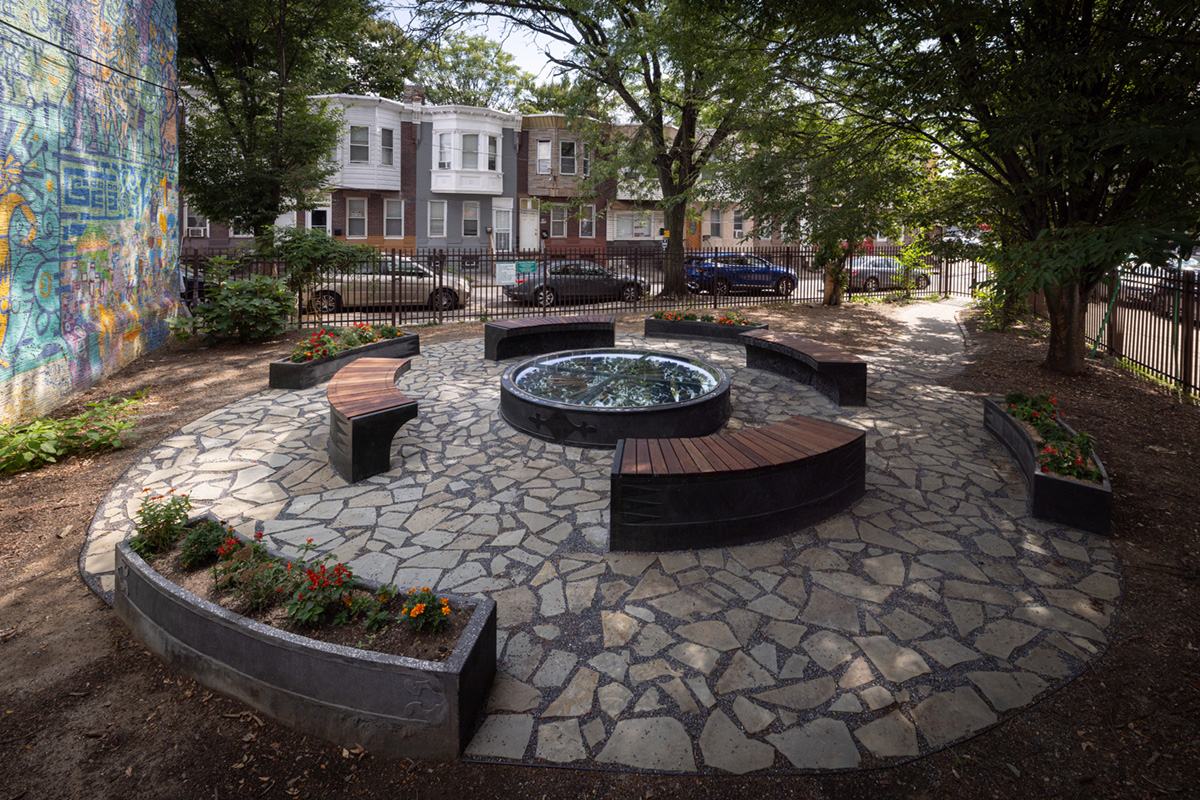
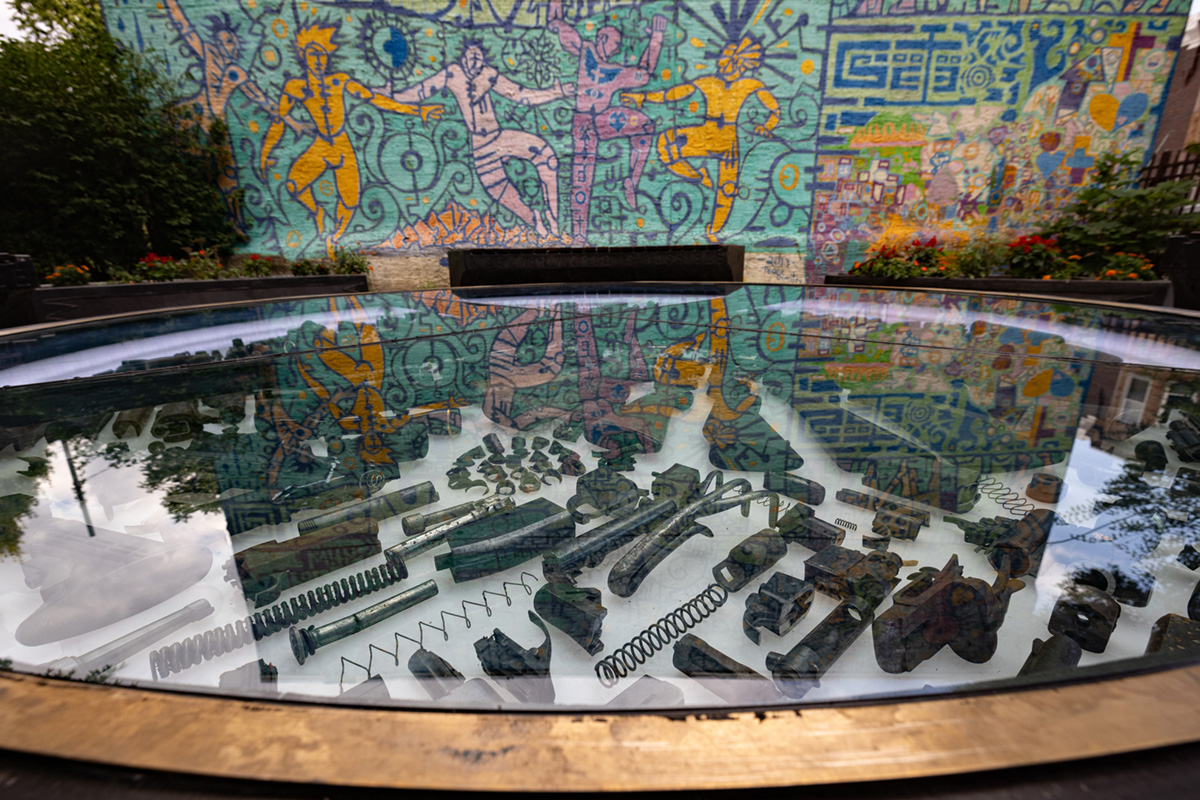
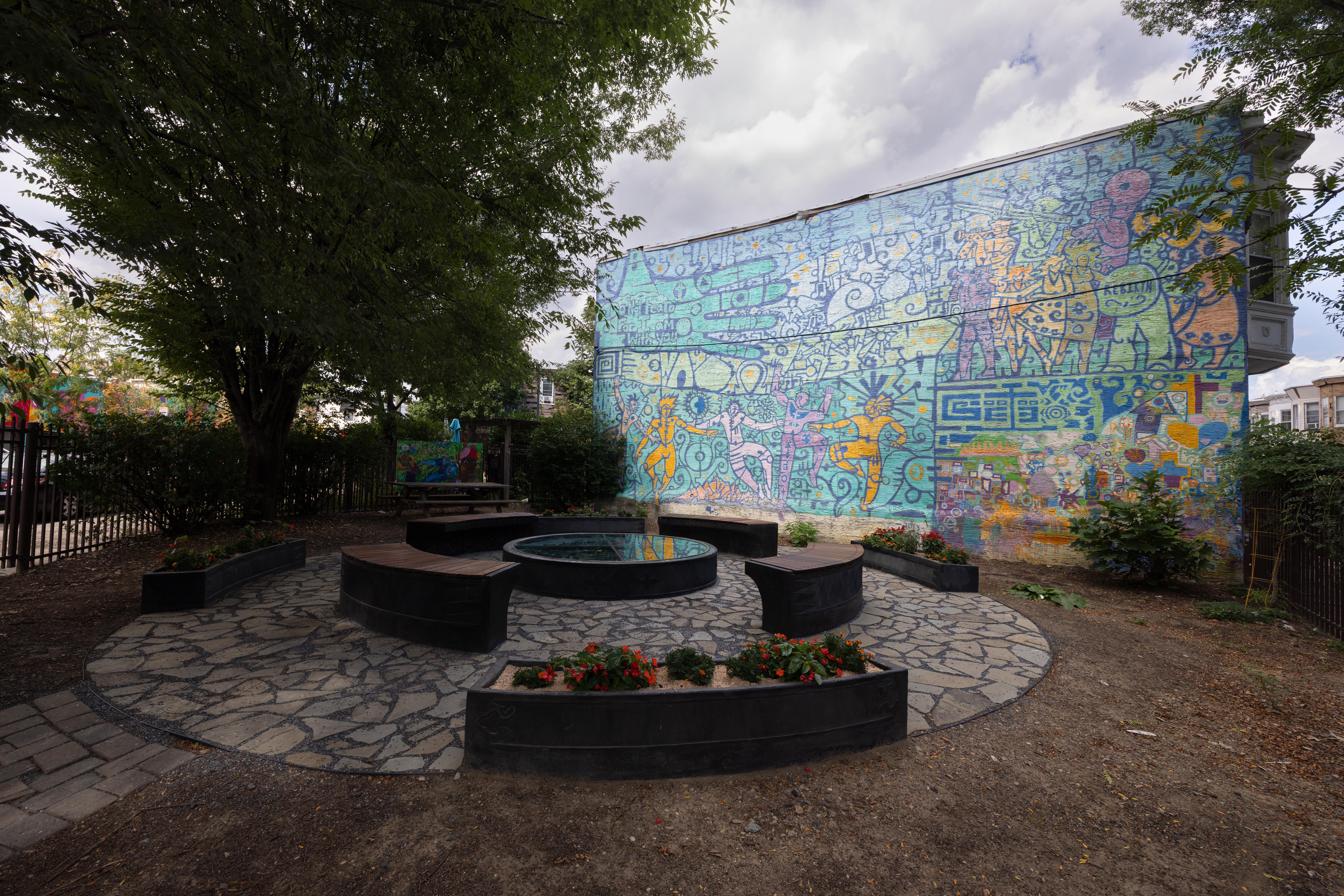
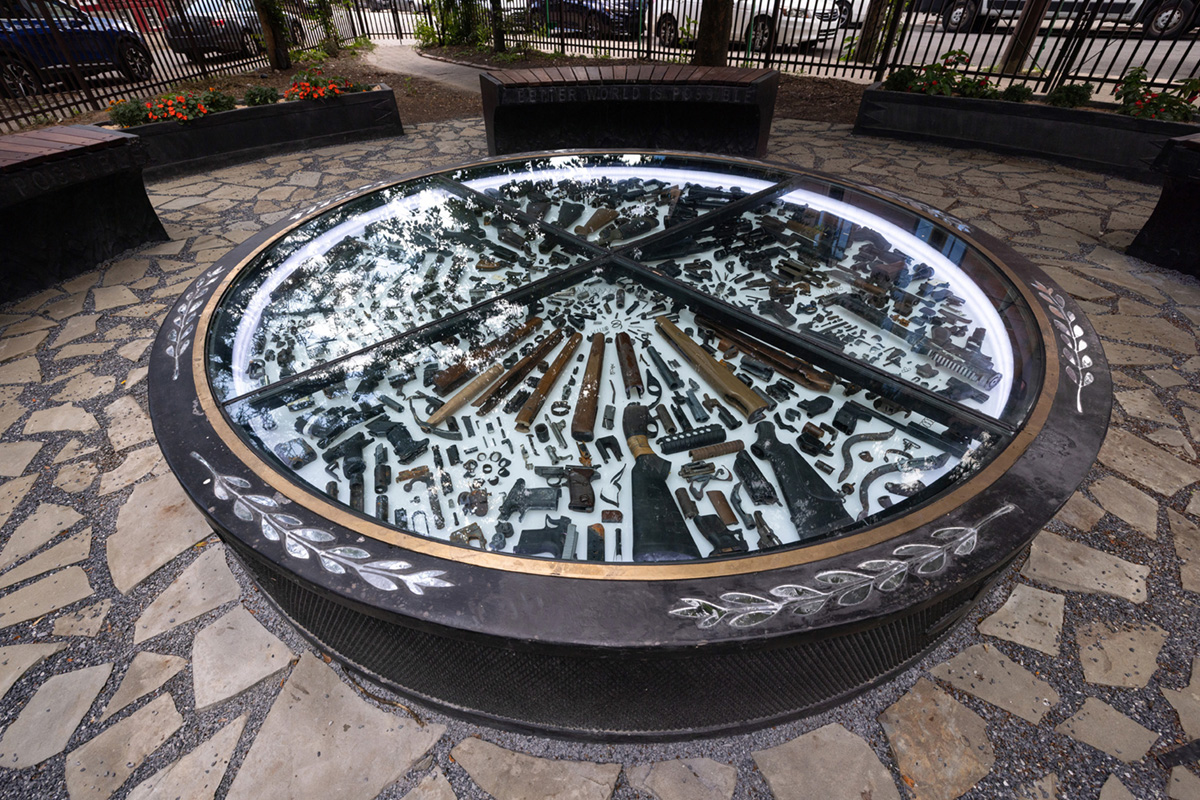
Instead of constructing a tall, imposing, welded steel structure made from gun parts, the artists chose to leave them chopped, unmended, and disassembled, like fossilized fragments excavated from the ground. The work was designed to be low to the ground and tangible, in a circular concrete vessel resembling both a large fire pit and museological vitrine, so that the objects invoke the concept of artifact, something no longer possessing its original violent function, but rather through its brokenness is transformed into a teaching tool. The concept became an object in-between artifact and gathering space, between teaching tool and memorial. We wanted to create a site that is inviting yet contemplative, where gun violence can be discussed among members of an affected community.
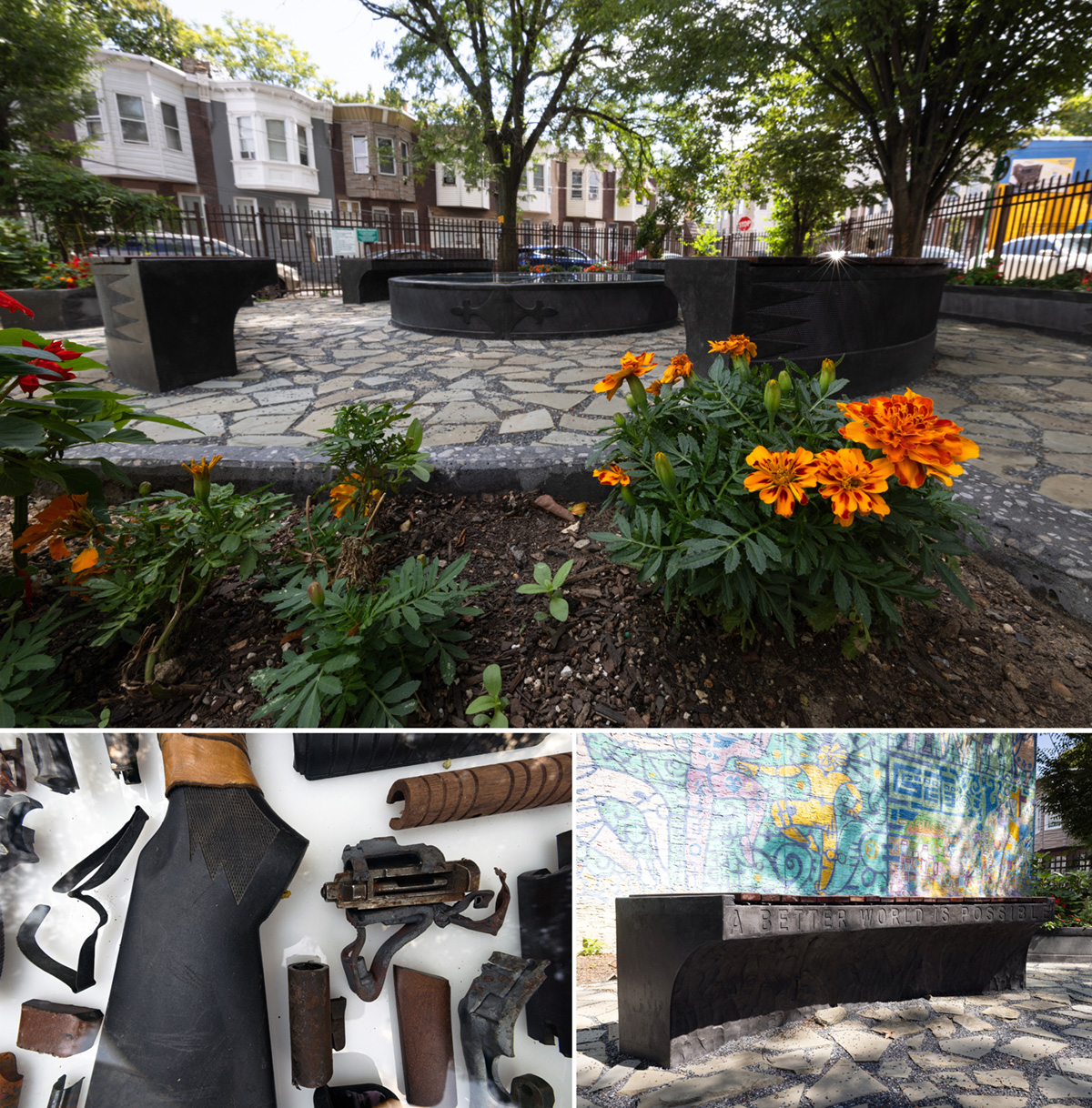
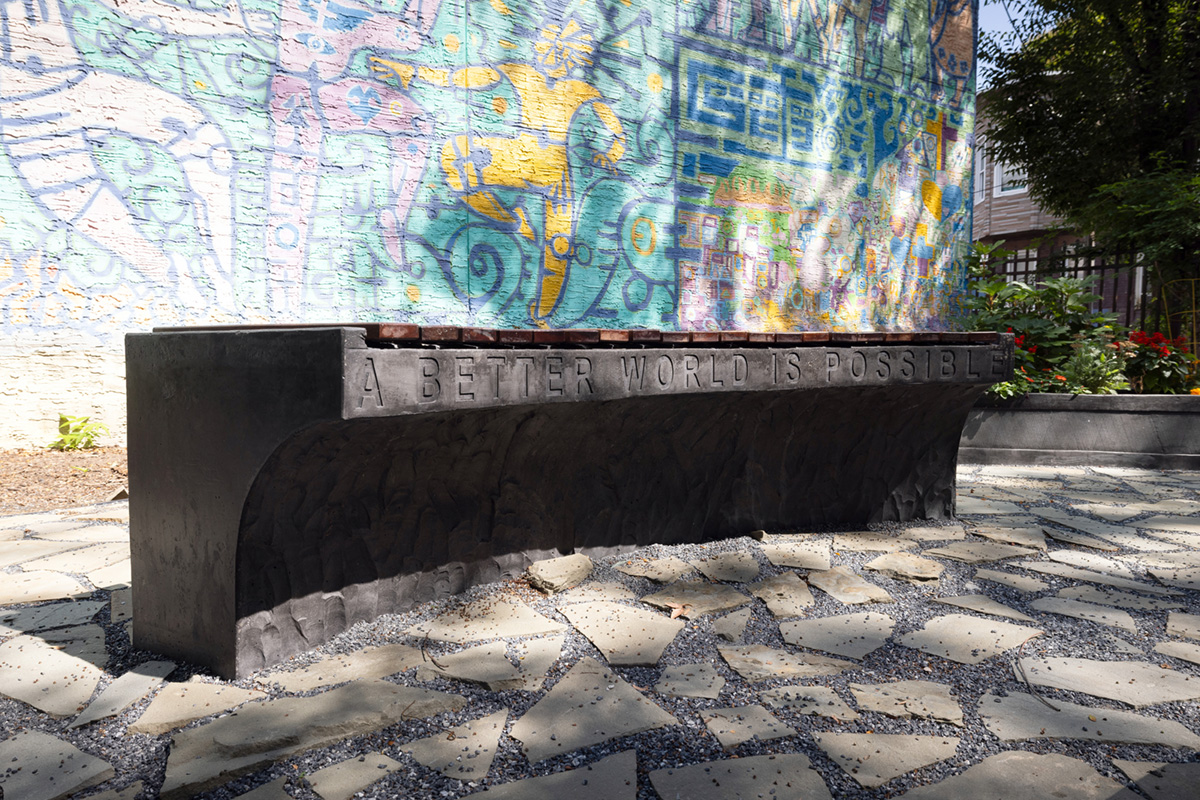
Many of the decorative elements included in the pavilion are appropriated from the traditional ornamentation of firearms, in an effort to subvert the aesthetics that allow us to consider them beautiful. Cast across the concrete walls are “Checkering” or crosshatch patterns as well as stylized symbols such as the Fleur-de-lis, reminiscent of traditional adornments carved into the wooden handles by artisans. The bench tops are cut from dark Sapele Mahogany, a rot resistant hardwood similar in appearance to the wooden stocks of shotguns and rifles. A charcoal pigment was added to the concrete and polished to a satin finish, creating an effect visually similar to the dark grey color of gun steel. We chose to mimic these aesthetics and harness these traditional adornments in an effort to invert a firearm’s ornamental aesthetics against itself.
The planters surrounding the exterior grow orange flowers, in reference to the color used for National Gun Violence Awareness Month (June). The ground is paved with Pennsylvania Bluestone, a durable sedimentary stone made over millions of years and mined in local quarries. The irregular cut of the stones invokes the fracturing of the gun pieces, reinforcing the theme of transformation through fragmentation.
In the center are over a thousand gun parts left in various states of decay, chopped, rusted, or smashed on an anvil. The specific pieces chosen for the sculpture are the ones least usable for making garden tools. Most of a gun is not usable for making garden tools, with only the steel barrel and wood stock being harvested for that purpose. This leaves pieces consisting of the mechanism such as the triggers, handles, scopes, and chambers as cast off parts that are also (coincidentally) the fragments that most signify a gun.
A Better World is Possible is a term used by activists involved in gun violence prevention to suggest that we can imagine a world that doesn’t include gun deaths. The sculpture at Peace Park is designed as a site of contemplation where community members can encounter an example of this thinking, where guns are treated like fossils from a future where we’ve solved this problem and evolved into a better world.
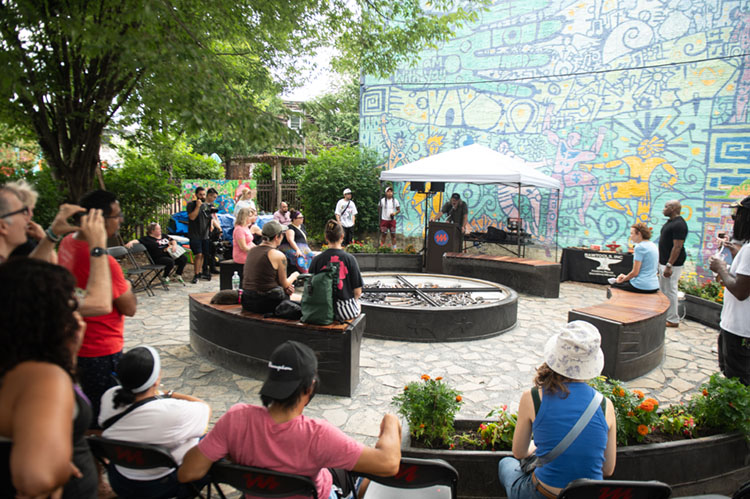
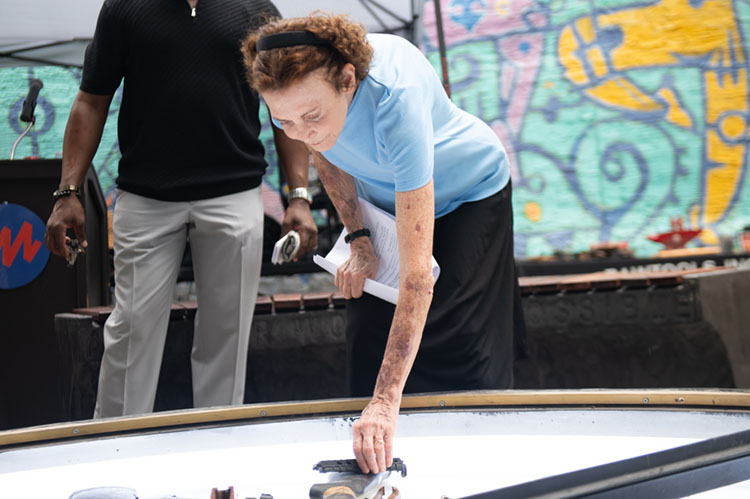
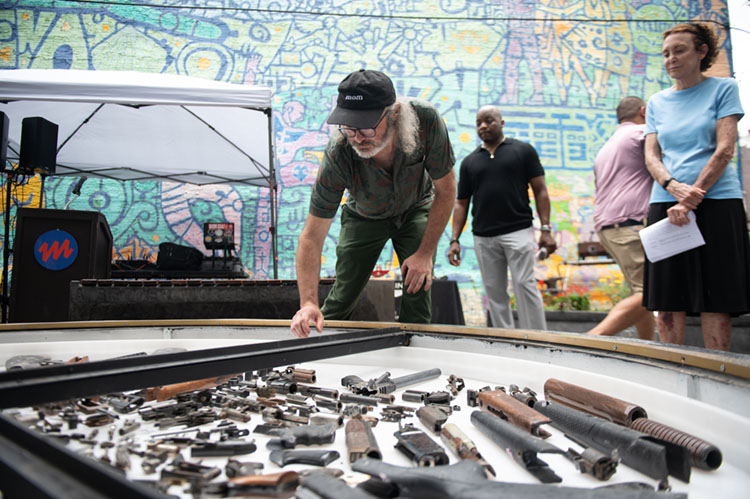
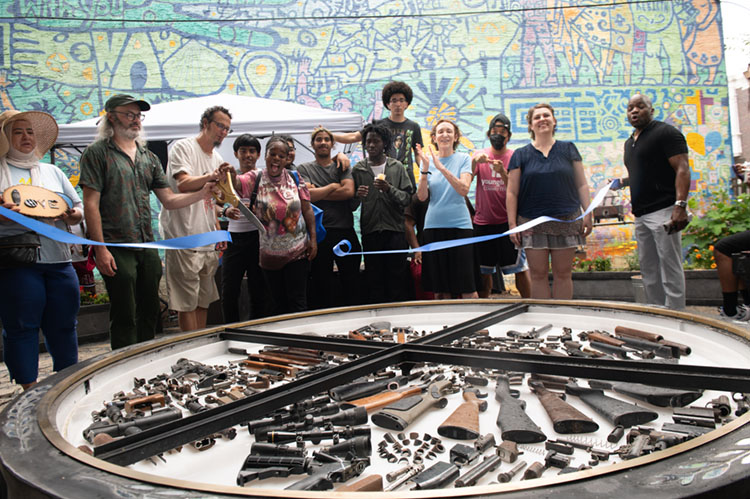
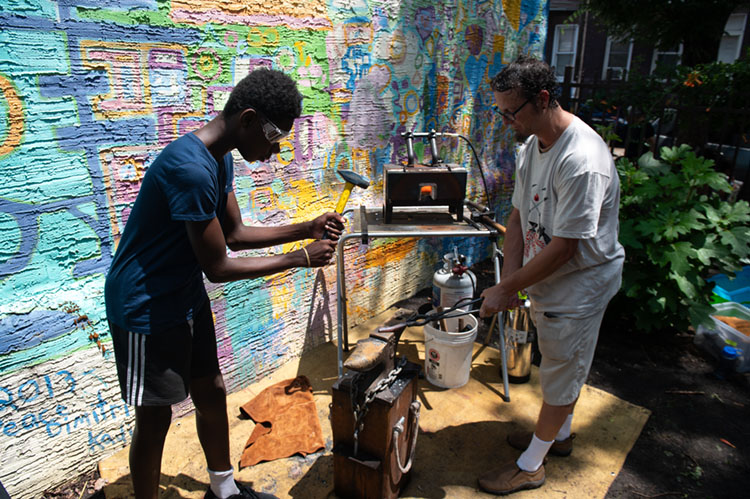
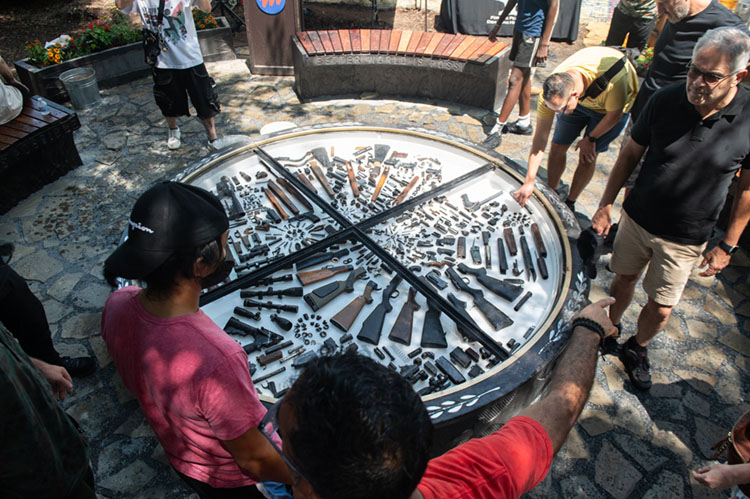
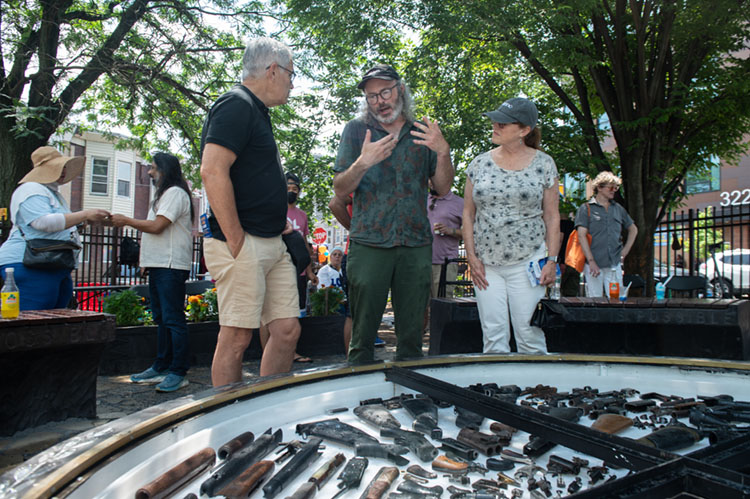
A Better World is Possible block party and dedication ceremony
July 20, 2025